
Introduction
Before I ever worked on scholarship policy, I was shaped by one.
When I received my first merit scholarship of ₹600 from the Government of Maharashtra in Grade 7, it wasn't just recognition for good grades. It was my first experience of self-dependence - the first time I could, however modestly, contribute towards easing my family's financial burden.
Years later, the Vidula Jalan Scholarship enabled me to pursue my MBA at the Indian School of Business. More importantly, it gave me something far more valuable - the freedom to choose. Without the pressure of repaying an education loan, I could continue pursuing a career in the social impact sector instead of one driven solely by financial considerations.
Looking back, I realise that the greatest value a scholarship creates isn't financial assistance. It is the freedom to choose one's future.
Now imagine Asha, a bright girl growing up in a remote village in Maharashtra. Her parents are daily-wage labourers, and educating both their children is beyond the family's means. As secondary school comes to an end, a familiar conversation begins at home.
"We can only afford to educate one child."
Should they invest in their son?
Or should they take a chance on their daughter?
For Asha, a scholarship is not merely financial support. It can determine whether she walks into a college classroom or gives up on her dream altogether.
When I later had the opportunity to work with the Government of Maharashtra on reimagining scholarship delivery, the assignment became deeply personal. It was no longer just about redesigning a government process. It was about ensuring that students like Asha spend less time navigating systems and more time building the futures they deserve.
Maharashtra supports nearly 24 lakh students every year through an annual scholarship outlay of almost ₹8,000 crore across multiple schemes administered by different departments. At this scale, delivering scholarships is not just a welfare programme, it is a governance challenge that demands citizen-centric design, administrative efficiency and digital innovation.
Walking in Asha's Shoes
Every meaningful governance reform begins with understanding the citizen's experience.

Image 1: Previously existing process for scholarships in Maharashtra
Together with officers across implementing departments, MahaIT, educational institutions and students, we spent weeks tracing the scholarship journey - from application to disbursement. Every stakeholder shared the same objective: ensuring that scholarships reached eligible students while maintaining accountability in the use of public funds.
In many ways, Asha's journey reflected what we heard repeatedly during field visits.
After securing admission to college, her first challenge wasn't academics. It was understanding which scholarships she was eligible for, which was the relevant department disbursing it, and which one would be the most beneficial for her. She then had to gather information and multiple documents, obtain eligibility certificates and evidences from different offices, travel to an internet café and rely on the café owners’ ability (creation of online profile with 126+ fields) and application filling charges, to complete the online application, upload the same information repeatedly, and wait through multiple stages of scrutiny before receiving financial assistance.
Like many students we met, Asha often spent nearly ₹1,000 on application support and another ₹1,000–1,500, obtaining supporting documents such as income and caste certificates, every year. For families already struggling to finance education, even applying for a scholarship became an additional financial burden.
None of these requirements were unreasonable. They had evolved over time to improve verification and ensure benefits reached the right students. Yet, viewed through Asha's eyes, the cumulative effort was significant. Renewal applications often required repeating much of the same journey despite very little changing from one academic year to the next.
The opportunity, therefore, was not to redesign the policy, it was to redesign the citizen's journey.
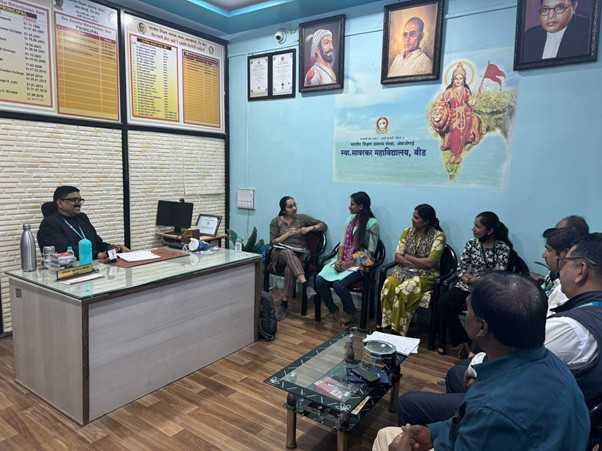
Image 2: Meeting on identifying key issues in getting scholarships
Reimagining Asha's Journey
As we walked through Asha's journey with departmental teams, every step led us to ask the same question:
Could this be simpler?
Imagine Asha applying after the redesigned system is implemented.
Instead of filling 125+ details, she can directly navigate to the available schemes; instead of navigating dozens of scholarship schemes, with just 10 inputs, a stronger search engine shows her only the scholarships she is eligible for, along with the benefits she can expect, clearly highlighted.
Instead of repeatedly entering the same information, nearly half of her application is automatically populated using trusted government databases. Application fields reduce by almost 50%, while supporting documents reduce from 12–17 to less than 8. Information that government already possesses no longer needs to be repeatedly submitted.
When Asha returns the following year, she doesn't begin from scratch. Since she continues in the same course, the system carries forward her previously approved information, requiring her to update only what has changed. Extending the validity of documents such as income certificates, further reduces recurring effort and cost.
We also realised that simplification wasn't only for students. Departments needed systems that could evolve just as easily.
Scrutiny is rationalised, fresh and renewal applications follow separate workflows, digital bill generation streamlines fund disbursement, and departments receive better visibility into application status and pendency.
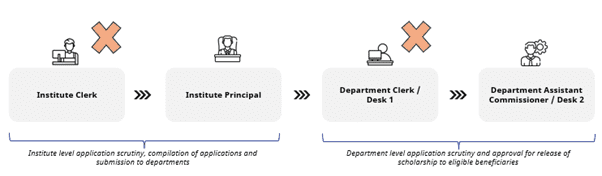
Image 3: Changes in the scholarship process
Further, by making the platform more configurable, departments can independently update scheme provisions, implement policy notifications and make routine operational changes without depending on technology teams. Good governance requires systems that evolve with policy, not the other way around.
The outcome is not just a simpler application process. It is a system that is easier for students to navigate, more efficient for administrators to manage and better equipped to ensure that benefits reach the right beneficiaries.
From Design to Delivery
Good process design creates possibilities. Good implementation creates outcomes.
One of the most encouraging aspects of this journey was the ownership demonstrated by officers across departments. Many of the strongest ideas did not originate in workshops, they already existed within the system. Our role was often to bring together citizen feedback, frontline operational experience and digital governance principles into a shared redesign process.
The recommendations therefore extended well beyond technology. They required policy decisions, inter-departmental coordination, database integrations and institutional ownership. With technology enhancements currently in the final stages of development and testing, the redesigned system is expected to be operational from the upcoming academic year.
As our discussions progressed, one question continued to surface:
What if, one day, scholarships could reach proactively, to every eligible student instead of students clamouring for it?
Perhaps that is a journey for the next phase…
Reflections from the Journey
While the recommendations focus on scholarship delivery, the journey itself offered a few enduring lessons on driving governance reform.
- Bold reforms begin with bold questions. Meaningful change started by questioning long-held assumptions rather than incrementally improving existing processes.
- Reform starts with humility. Some of the best ideas already existed within the system. Listening, identifying committed officials and enabling them to lead proved just as important as designing solutions.
- Persistence turns ideas into reform. Every recommendation evolved through continuous brainstorming, coordination, validation and consensus-building across stakeholders.
- Design for evolution, not just implementation. Public programmes continuously evolve. Digital systems should give departments the flexibility to adapt without depending on technology teams for every operational change.
- Lasting change needs both top-down leadership and bottom-up insights. Strategic vision from leadership, combined with the practical wisdom of frontline officials, created reforms that were both ambitious and implementable.
Coming Full Circle
As I reflect on this journey, I often think about the two scholarships that quietly shaped my own life. One taught a young schoolgirl what self-reliance felt like. The other, gave her the freedom to choose a career driven by purpose instead of financial obligation.
Being part of strengthening that very system has therefore been deeply meaningful. If this reform succeeds, its greatest achievement will not be the forms we simplified, the documents we eliminated or the technology we redesigned. It will be the thousands of Ashas across Maharashtra whose dreams no longer depend on whether their parents can afford to educate them. It gives them the Freedom of Life itself…
Because every scholarship carries the power to change one life. And when millions of such lives change, good governance changes the future of a nation.