
One thing I understood very quickly after working with the government is that nothing is as simple as it looks from the outside. Even something as basic as sending an invitation is not really just sending an email. It can mean drafting formal letters, getting the format right, printing them, routing them for signatures, following up with different offices, and making sure they reach the right people on time. I learnt that the hard way while helping put together two AI summits. One in Odisha. One in Delhi. A few months later, I was standing inside Bharat Mandapam, representing the state on a global stage, with big tech giants like Google, OpenAI, and Meta just down the aisle.
I still don't fully know how I got there. But I can tell you exactly what it felt like, and what I learnt from the experience.
I Thought I Had Time
I joined Samagra in August 2025, and for the first few weeks, everything felt new. The people, the language of policy, the way decisions moved through the system. I was still learning names, still trying to follow conversations in meetings, and then Googling acronyms afterwards
Before this, the biggest thing I had organised was a college-level case competition involving 1,000 teams, and at the time, that is what “scale” meant to me. Little did I know that scale could be an entirely different concept.
I came into this system thinking I’d have time to settle in. However, that lasted about two months.
In the first week of October, my team sat down for a quarterly strategy discussion. It was just us in a room, with a board on the wall where we were laying out priorities for the next few months. And somewhere in that discussion, it became clear that Odisha would be hosting the Regional AI Summit on the 19th and 20th of December as a precursor to the India AI Impact Summit happening in Delhi from the 16th to 20th of February. This was going to be one of seven such official pre-events held across the country.
And it was going to be my workstream.
Nobody asked if I was ready. It just landed. And the first thing I felt was excitement. This is a great opportunity. I held on to that feeling for about a week. Then my Program Lead said something I still remember: "If this goes well, everything goes well."
Odisha was being positioned as one of India's emerging leaders in AI implementation. This summit wasn't just an event. It was a statement about visibility, about partnerships, and about positioning the state so that solution providers would reach out and matchmaking for AI implementation across healthcare, education, and agriculture would grow.
I can still picture that board and the three stars written right next to "AI Summit." That was the moment it stopped feeling like an opportunity and started feeling like something I could not afford to get wrong.
Where Every Detail Is a Decision
At this scale, I quickly realised that precision isn't optional and every small detail either adds to the event or takes away from it. There is no neutral.
Take the letters, for example. One night, my associate and I printed a hundred formal invitations. Then we found a recurring mistake across the letters. All one hundred were wrong, and there were just three weeks left before the summit. We corrected it, printed everything again, and went back to chasing signatures the next morning. A wrong designation, a misplaced line - it doesn't matter how small it is. At this level, it matters.
But it went far beyond letters. Every logistical decision was directly connected to how the event would be experienced and perceived. The venue layout shaped how attendees moved through sessions. The branding, from stage backdrops to booth signage, determined the first impression for every media crew and every camera. The speaker experience - how they were received, where they waited, how smoothly their sessions ran - reflected directly on the state's credibility. Even the attendee flow, how registration worked, how sessions transitioned, whether someone could find the right hall, all of it added up.
None of these things is glamorous. But each one is a decision. And at a summit where over 2,000 people will show up, hundreds of thousands will reach on social media, and over 30 speakers will take the stage, getting the details right isn't just good practice. It's what separates an event that works from one that merely happens.
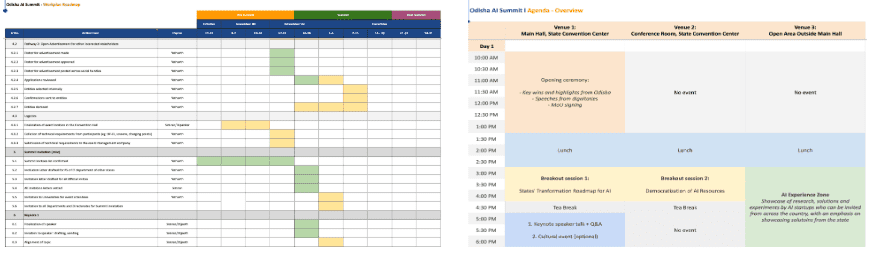
[Image 1&2: Odisha AI Summit Workplan and Agenda]
Chaos as a Constant
As the summit got closer, I realised that nothing stays fixed for too long.
The agenda changed more times than I can count. Speakers were changed two days before they were supposed to be on stage. Hotels were shifted at the last minute. An email would land at 7 AM saying a speaker's availability had changed, which meant reworking the entire agenda. Every time I thought something was locked, it unlocked itself.
I was still only two months into the role, but after a point, it stopped mattering. The summit date was not moving. People were going to show up. So things had to be closed.
What I learnt here was not just that chaos is constant but that you can learn to operate inside it. You stop waiting for things to stabilise and start making decisions with what you have. That's when ownership stopped being something I'd heard about and became something I felt. It meant everything is yours. The failures, the gaps, the wins. End to end. And I didn't learn that from a framework. I learnt it from reprinting those hundred letters at midnight and showing up the next morning ready to chase signatures again.
The Day the Spreadsheets Became Banners
Then the summit day arrived.
I walked into the venue early. The chairs were already there. The banners I had planned were hanging from the walls. The startup booths I had spent weeks selecting were being set up by founders testing their demos. I remembered how messy that selection process had been. Late-night calls debating which startups were ready and which ones we needed to round out the mix. And here they were, standing behind booths with their logos up and their pitches ready.
It didn't look messy at all.
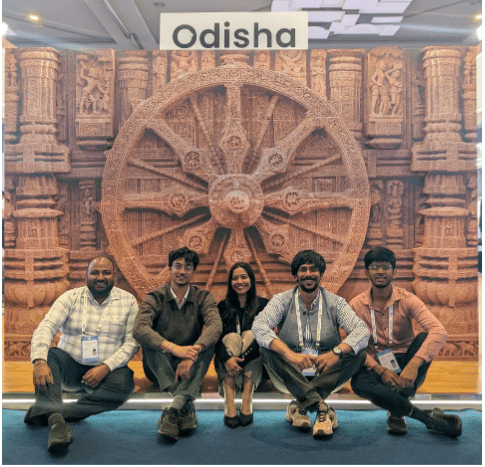
More than 2,000 people showed up. Over 30 speakers took the stage. The halls filled up fast. Media crews set up cameras. Parallel sessions started running in different rooms. My team - Vijeeth, Simran, Prattusha, Suryaansh, and I - split up across the venue. Someone's mic isn't working; fix it. A speaker can't find the green room; walk them there. You just keep things moving, one small problem at a time.
Somewhere in the middle of that day, standing at the back of a packed hall, I had a small moment of realisation. Confidence had not come from planning everything perfectly. It had come from handling things as they happened.
The Odisha AI Summit went well, really well. And when it ended, I exhaled for the first time in weeks.
I thought the chapter was over.
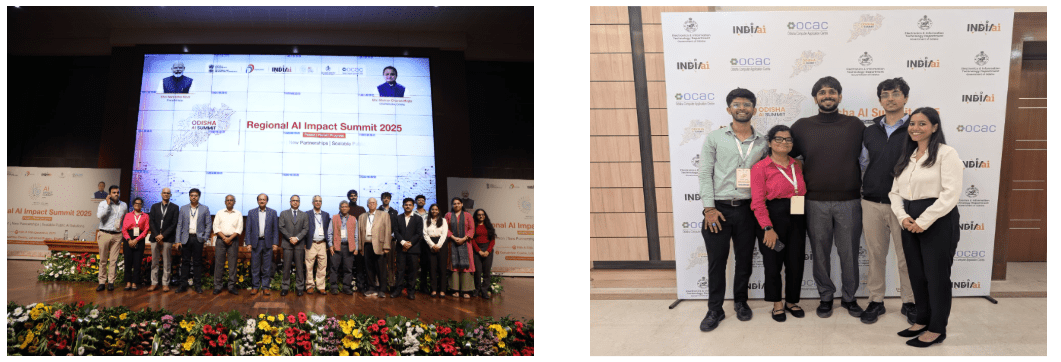
[Image 3&4: Odisha AI Summit ending ceremony followed by a team picture]
The Door That Opened After
The Odisha AI Summit didn't close a chapter. It opened a door. Very quickly, the focus shifted to the India AI Impact Summit in Delhi. This wasn't state-level anymore. This was global. Thousands of attendees. Government ministers. Every major tech company you can think of. And Odisha needed to show up. Not just be present, but actually show up.
On paper, some of the tasks looked familiar: booth planning, startup coordination, collaterals, videos, brochures, and showcases. But the context was completely different. We had around 1,300 square feet of booth space, thirteen startups to coordinate, impact videos to prepare, a state brochure to close, and our in-house work to present.
All of it had to come together in barely a month and a half after the Odisha AI Summit.
But something was different this time. I wasn't figuring things out from scratch. I was building with confidence. The first summit had shown me what pressure looked like and, more importantly, that I could work through it.
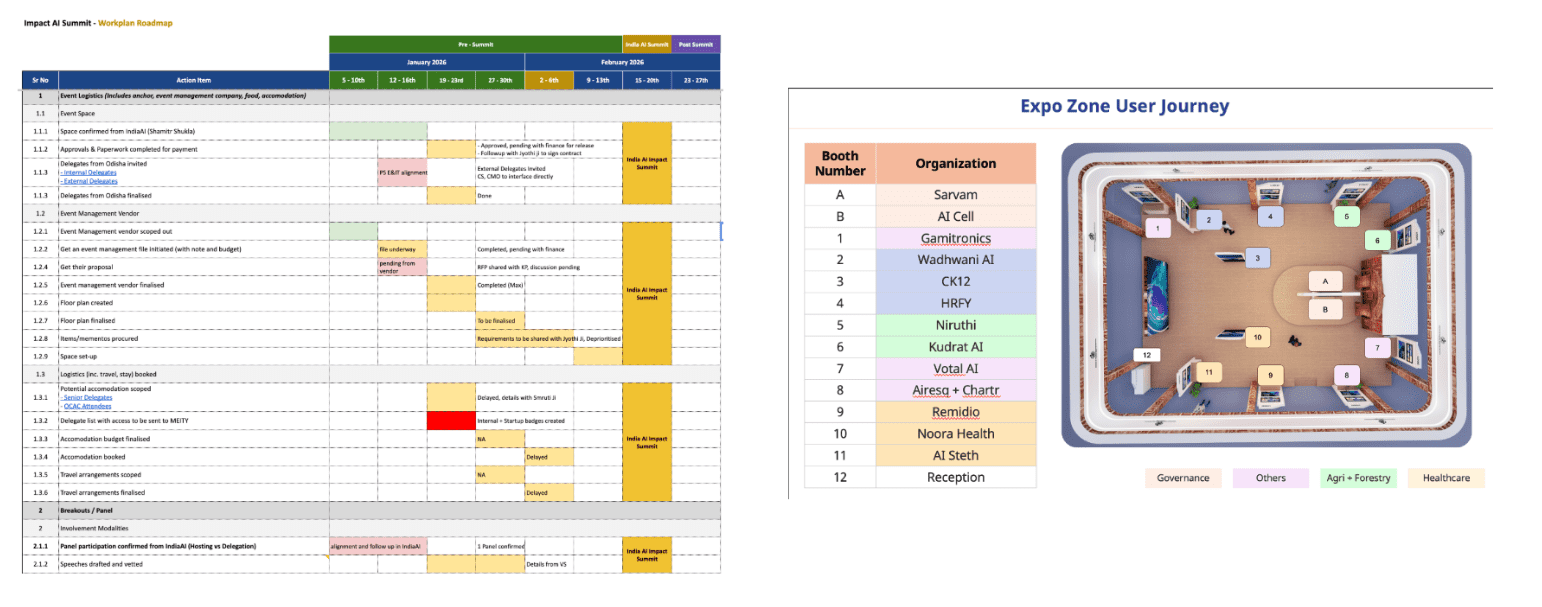
[Image 5&6: India AI summit workplan and Booth layout]
Cutting Through the Noise
The weeks leading up to Delhi were relentless. There were impact videos to finish, brochure drafts going back and forth, booth designs to review, startups to coordinate, and new inputs coming in almost every day.
This was where I really learned about cutting through the noise and prioritising. By then, I had started asking myself a very simple question: when someone walks into Odisha's booth, what should they remember?
This question helped me make decisions in a way I hadn't done before. It also made me realise that good execution is not just about finishing every task on a list. By the time we left for Delhi, I was tired, but I did not feel lost. There were still things that would change. But I knew the story we were trying to tell and which parts of it we could not afford to dilute.
Bharat Mandapam
So here I am. Back where I started this story.
On the opening day at Bharat Mandapam, the first thing I remember is how large everything felt. There were people everywhere. Ministers moving with security, startup founders setting up their stalls, media teams walking around, and big technology companies with massive booths. In the middle of all of that was Odisha's booth. Our booth.
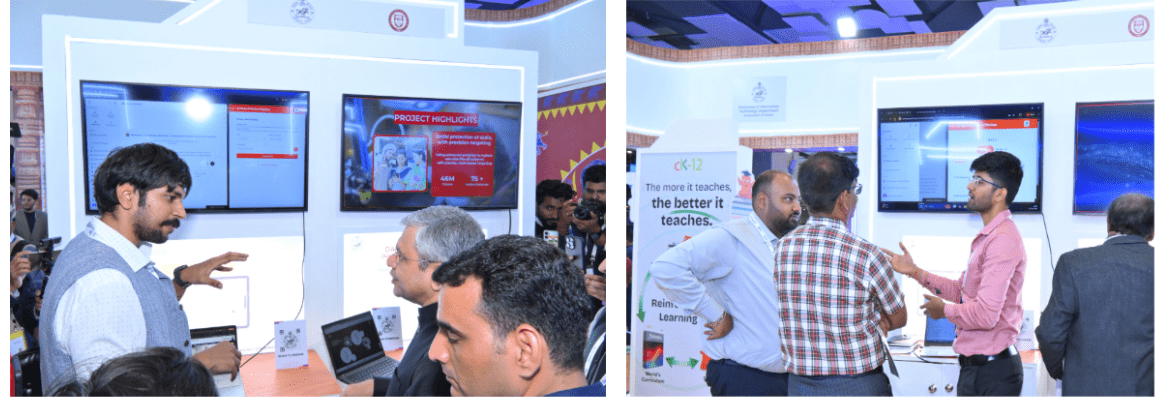
I spent the next few days managing the space, explaining our solutions, hosting visitors, and telling Odisha's AI story to anyone who stopped by. Thirteen startups alongside us. Our in-house work on display. Stakeholders walking in, some curious, some senior enough to make me take a breath before starting the pitch again.
One of those moments was when Hon'ble Union Minister Shri Ashwini Vaishnaw visited our stall. Our work was presented, the solutions were shown, and for a moment, everything we had been working on was right in front of him. While it was a short visit, it stayed with me. For me, it was a culmination of every late night, every reprint, every follow-up, every change we absorbed, and every decision we made under pressure. It had all added up to this. A clear indication that what we built was good. That Odisha's story landed.
Here, I was no longer just coordinating things in the background. I was representing the work, explaining it, and holding my own in rooms and spaces that had once felt much larger than me.
[Image 7&8: Demonstrations to Union Minister Mr Ashwini Vaishnaw and demonstration to other state delegations]
What I Learned from Two Summits About AI in India
But beyond the personal growth, these summits gave me a window into something much larger. And some of what I saw will stay with me far longer than the management side of things:
State benchmarking. Walking through pavilions of other states at the India AI Summit was one of the most eye-opening experiences. Every state is approaching AI differently, with different priorities, different levels of maturity, and different models of implementation. Seeing what others were doing gave us a real benchmark for where Odisha stands, what we're doing well, and what we can adopt. That kind of cross-state learning doesn't happen in reports or calls. It happens when you're standing in someone else's pavilion, asking questions, and comparing notes.
Ecosystem scoping. The sheer breadth of the AI ecosystem on display was staggering. Startups, big tech companies, research labs, and government bodies, all under one roof. From those interactions, we were able to scope out more than 180 solutions. Of those, we demoed around 30 in detail. And 10 of them are still in our active funnel today, being evaluated for potential implementation in Odisha. That pipeline didn't exist before the summit. It was built in those few days.
High-impact use cases. Many of the startups we had initially engaged with during the Odisha AI Summit had evolved significantly by the time we met them again in Delhi. AI moves fast, and solutions that were in prototype stage three months ago had matured, pivoted, or expanded. Being at the India AI Summit let us double-click on high-impact use cases and reassess whether they currently fit the spectrum of solutions Odisha needs.
National visibility and cross-learning. Odisha also used the summit to share its own approach for solution validation and AI adoption. From a visibility lens, this positioned Odisha as one of the states actively demonstrating what it's doing in AI with the approach. And at the same time, we were learning from other states, companies, and organisations about best practices, implementation challenges, and what's actually working on the ground. That kind of two-way exchange, showcasing and absorbing at the same time, is what makes these summits genuinely valuable beyond the optics.
Seven months into my first role, I contributed to a national and an international summit.
I came out of them different. Not just in how I work, but in how I see the AI landscape in India, what it takes to position a state within it, and what these events actually unlock when done right.
And ownership? It never waited until I was ready. It arrived when the work did. And by then, the only choice I had was to step back or to step in.
I chose to step in.
[Image 9: Team picture towards the last day of the Summit]